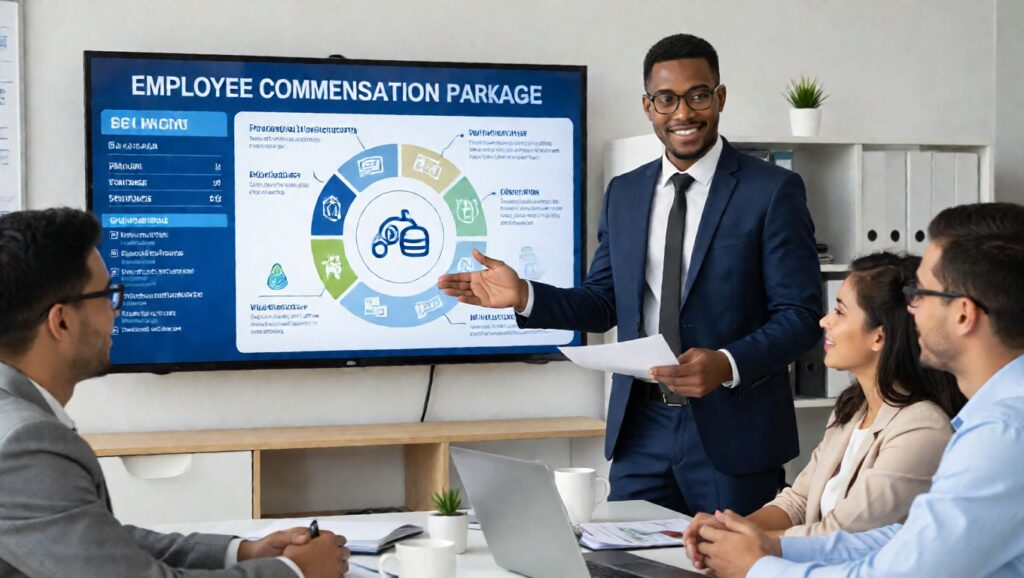
As competition for qualified employees continues to increase, many business owners are asking how can small businesses offer competitive compensation beyond salary. In 2026, employees are evaluating the complete employment experience rather than focusing exclusively on their paycheck. Small businesses that create attractive compensation packages can compete more effectively for talented employees while improving retention and productivity.
To begin, it’s important to understand why should small businesses offer employee benefits beyond salary in 2026. Salary remains important, but employees also value flexibility, career development, recognition, meaningful work, work-life balance, and opportunities to grow. A well-designed compensation package can make a small business more attractive without requiring it to match the compensation structure of a large corporation.
One of the biggest advantages is understanding how employee benefits help attract top talent. Benefits such as flexible schedules, remote or hybrid work opportunities, paid professional development, performance bonuses, additional time off, and employee recognition programs can make a job offer considerably more appealing.
Many owners ask what non-salary benefits can small businesses offer employees. Depending on the business and budget, possibilities include flexible working hours, compressed workweeks, remote work, professional training, mentorship, wellness programs, additional paid time off, technology allowances, employee discounts, profit-sharing, and performance-based incentives.
A common question is does flexible work increase employee productivity and sales. For many roles, flexibility can improve employee satisfaction and help workers perform at their best. The key is to establish clear expectations, measurable objectives, communication standards, and accountability.
Small businesses should also consider how they can compete with larger companies for employees. A smaller company can often provide advantages that large corporations cannot easily replicate, such as direct access to leadership, faster career advancement, greater responsibility, flexible arrangements, and the opportunity to make a visible impact.
Another important consideration is what are the best employee incentives for small businesses. Incentives should connect employee performance with measurable business outcomes. Sales bonuses, referral incentives, customer satisfaction bonuses, team performance rewards, and profit-sharing arrangements can encourage employees to contribute directly to company growth.
Businesses should also understand how professional development benefits improve employee retention. Employees who see opportunities to develop new skills and advance their careers are more likely to view the company as a long-term opportunity rather than a temporary job.
Similarly, employee bonuses can increase productivity and business sales when they are structured around clear and achievable objectives. Employees should understand exactly how their performance contributes to rewards.
Ultimately, competitive compensation improves small business profitability by helping companies attract stronger candidates, reduce turnover, maintain productivity, and build a more engaged workforce.
In 2026, small businesses don’t necessarily need the biggest salaries to attract and retain great employees. They need to create a compelling overall employee experience. Combining fair compensation with flexibility, recognition, professional development, meaningful incentives, and opportunities for advancement can help small businesses build stronger teams and increase long-term sales and profitability.