
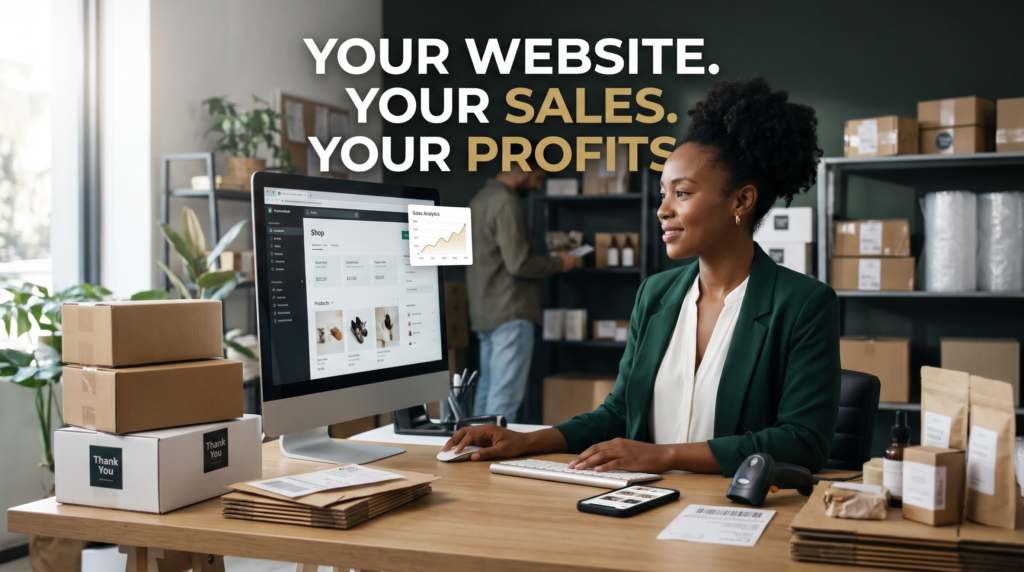
In today’s digital economy, a business website can be much more than an online brochure. When designed and managed effectively, it can become a powerful retail sales channel that attracts potential customers, showcases products, processes orders, and generates revenue around the clock. For small businesses looking to increase earnings without relying entirely on third-party retailers, selling products through your own website offers an opportunity to build a more independent and profitable business.
Unlike relying exclusively on external marketplaces or retail partners, an independently managed online store gives business owners greater control over their branding, product presentation, customer experience, and sales strategy.
Keep Greater Control Over Sales and Profit Margins
One of the primary advantages of owning an online store is the ability to control the sales process. Third-party marketplaces may charge listing fees, transaction fees, commissions, or advertising expenses that affect profitability. An independent website can reduce dependence on these platforms, although it still requires payment processing, hosting, maintenance, marketing, and fulfillment.
Consider a small business selling a product for $60. If the product costs $25 to acquire or manufacture and the remaining direct transaction and fulfillment expenses total $10, the business has $25 left in contribution toward other operating costs and profit.
If an alternative marketplace adds another $6 in fees without generating additional sales or savings, the business would retain $19 instead. This simplified example demonstrates how an independent online store can improve e-commerce profitability when its total operating costs are lower.
The key is to compare the complete cost of each channel rather than assuming that selling independently is always cheaper.
Attract More Customers Through Search Engines
Having a website creates opportunities to attract customers who are actively searching for specific products. Through search engine optimization (SEO), businesses can publish useful content, create detailed product pages, and target relevant search terms that match customer needs.
For example, a retailer selling home accessories might publish articles about choosing affordable home decorations, organizing small spaces, or selecting practical gifts. These pages can introduce potential customers to the business and direct interested readers to relevant products.
Learning how small businesses can use SEO to increase online retail sales can help owners build a long-term source of website traffic without relying exclusively on paid advertising.
Effective SEO requires relevant content, helpful product descriptions, mobile-friendly design, clear navigation, and technically sound pages. Results typically take time, but organic search can become a valuable acquisition channel as a website develops authority and visibility.
Turn Website Visitors Into Paying Customers
Attracting visitors is only the first step. A profitable online store must also make it easy for customers to complete purchases.
Clear product photographs, accurate descriptions, transparent pricing, visible shipping information, trustworthy payment options, and a straightforward checkout process can help reduce uncertainty.
Small businesses should also understand what website features help increase e-commerce conversion rates. These may include customer reviews, frequently asked questions, product comparisons, guest checkout, and prominent calls to action.
Even modest improvements can matter. If 1,000 monthly visitors generate 20 purchases, the conversion rate is 2%. If improvements increase purchases to 30 while traffic remains unchanged, the conversion rate rises to 3%. At an average order value of $50, that represents an increase from $1,000 to $1,500 in monthly sales revenue, before costs and returns.
This example illustrates why improving the buying experience can be just as important as attracting more visitors.
Build Customer Loyalty and Encourage Repeat Sales
An independent website can also help businesses develop lasting relationships with customers. With appropriate consent and privacy practices, owners can use customer information to provide order updates, send relevant email offers, recommend complementary products, and remind customers when frequently purchased items may need replenishing.
For instance, a business selling personal care products could introduce convenient replenishment reminders, while a retailer selling gifts could send seasonal product recommendations.
These strategies help businesses understand how to turn website visitors into repeat customers and potentially increase customer lifetime value. Repeat purchases can also reduce reliance on constantly acquiring new customers through advertising.
Businesses should focus on relevant communications and a positive customer experience rather than sending excessive promotional messages.
Use Automation to Reduce Work and Support Growth
Modern e-commerce websites can automate many routine tasks, including order confirmations, payment notifications, inventory updates, shipping communications, and abandoned-cart reminders. Integrations with customer relationship management systems, accounting software, and inventory tools can further reduce manual administration.
AI-powered website assistants can also answer common product questions, guide visitors toward relevant items, and help qualified prospects find the information they need. These tools can improve responsiveness, although their effectiveness depends on proper setup, accurate information, and ongoing monitoring.
Automation allows business owners to spend less time on repetitive tasks and more time improving products, customer service, and sales strategies.
Turn Your Website Into a Long-Term Business Asset
The best way to increase profits from an e-commerce website is to combine effective marketing with a strong customer experience and careful financial management.
Business owners should regularly monitor website traffic, conversion rates, average order value, customer acquisition costs, return rates, and contribution margins. These measurements help identify which products and marketing channels generate the greatest financial return.
Selling through your own website does not guarantee higher profits. Success depends on attracting the right customers, managing operating costs, and delivering products and services that people want to buy.
However, when managed strategically, an independent online store can provide greater control over sales, stronger customer relationships, and new opportunities for sustainable growth. For small businesses seeking greater financial independence, investing in a well-designed, customer-focused website can be an important step toward increasing retail earnings.