Technology, customer expectations, and competitive conditions can change quickly. As a result, many business owners are asking how can hiring adaptable employees increase small business sales in 2026. Employees who can learn new skills, adjust to changing circumstances, and embrace new technologies can help businesses respond faster to opportunities and challenges.
To begin, it’s important to understand why adaptability is important when hiring small business employees. A small business may not have the resources of a large corporation, which means employees frequently need to perform multiple responsibilities. Someone who can learn new processes and take on changing responsibilities can become significantly more valuable to the organization.
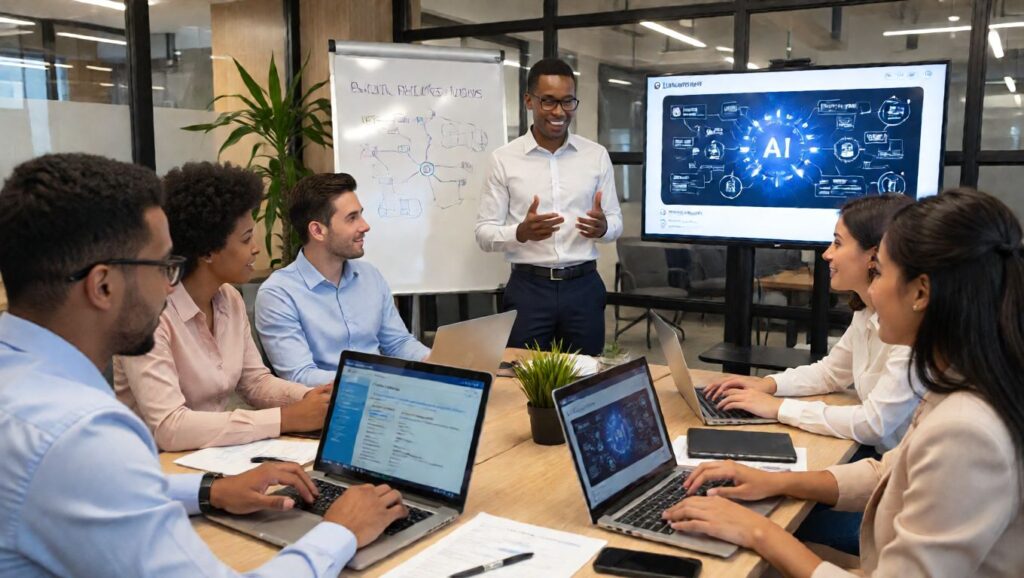
One of the greatest advantages is understanding how willingness to learn improves employee performance. Employees who actively seek knowledge can become proficient with new software, products, sales techniques, customer service procedures, and AI-powered business tools. Instead of resisting change, they become contributors to business improvement.
Many business owners ask what are the best ways to assess adaptability during an interview. Behavioral questions can reveal how candidates responded to change in previous positions. Ask candidates to describe a time they had to learn unfamiliar technology, take on a new responsibility, adjust to a major organizational change, or complete a task without extensive instructions.
Another important consideration is how small businesses identify candidates who learn quickly. Look for evidence of curiosity, initiative, self-directed learning, professional development, cross-training, and successful transitions into unfamiliar roles. Candidates don’t necessarily need to know every tool your business uses today if they demonstrate an ability to learn new ones quickly.
A common question is does hiring adaptable employees reduce employee turnover. Adaptable employees may be better equipped to navigate organizational changes and evolving responsibilities, which can help reduce frustration and improve long-term engagement.
Businesses should also explore what interview questions reveal a candidate’s willingness to learn. Questions such as “Tell me about a skill you taught yourself,” “Describe a time you had to learn something quickly,” and “What is something new you’ve learned recently?” can provide valuable insight.
Understanding how employee adaptability helps businesses respond to market changes is especially important in 2026. New technologies, AI tools, changing customer behavior, and emerging competitors can create both challenges and opportunities. Adaptable employees help businesses adjust without completely rebuilding their workforce.
Continuous learning also supports productivity. Employees who regularly improve their skills can discover better ways to complete tasks, communicate with customers, and solve problems.
Finally, understanding how adaptable employees create a competitive advantage highlights the long-term value of this hiring practice. A flexible workforce can help a small business experiment, innovate, and respond to new opportunities faster than competitors with rigid processes.
In 2026, adaptability and willingness to learn are among the most valuable qualities a small business can seek in a new employee. Hiring people who embrace change and continuously develop their skills can strengthen productivity, improve customer experiences, accelerate innovation, and ultimately contribute to increased sales and profitability.