Hiring the right employee is only the beginning. Many small business owners ask how can small businesses improve employee onboarding in 2026 because a new employee’s first few weeks can have a significant impact on productivity, engagement, customer service, and long-term retention.
To begin, it’s important to understand why structured employee onboarding is important for small businesses. Without a consistent onboarding process, new employees may receive incomplete information, inconsistent training, or unclear expectations. A structured program gives employees a clear path from their first day toward becoming confident and productive members of the team.
One of the biggest advantages is understanding how employee onboarding improves productivity and sales. Employees who understand their responsibilities, company procedures, products, technology, and customer expectations can begin contributing faster. When employees become productive sooner, the business can serve more customers and take advantage of additional sales opportunities.
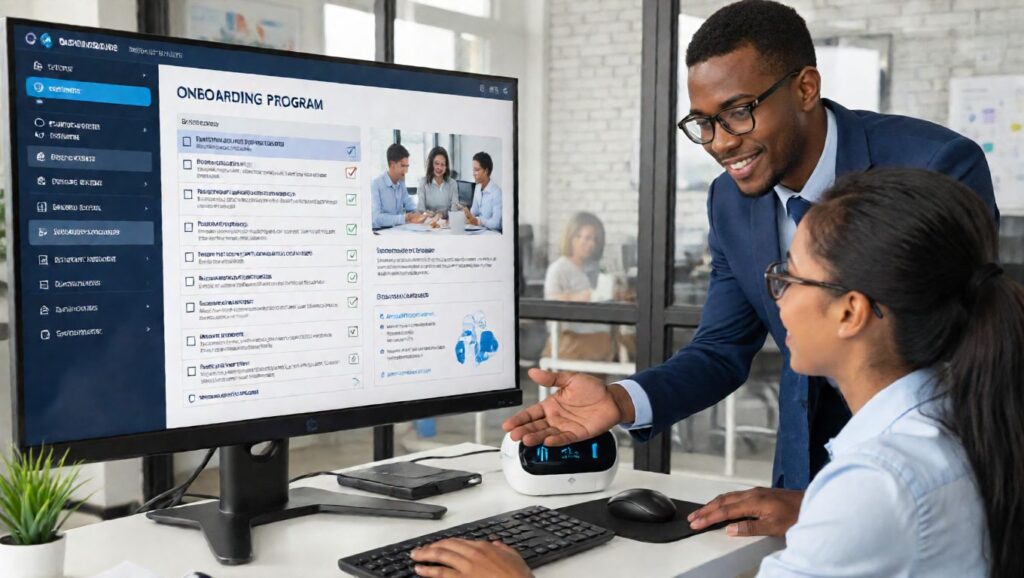
Many business owners ask what a small business should include in an employee onboarding program. A strong program can include an introduction to the company, organizational policies, job responsibilities, technology access, product training, customer service standards, sales procedures, communication expectations, and performance goals.
A common question is does better onboarding reduce employee turnover. It can. Employees who receive clear expectations, adequate training, and support during their transition are more likely to feel confident and connected to the organization. This can reduce confusion and frustration during the critical early stages of employment.
Businesses should also consider how quickly new employees should become productive. The answer depends on the position, but businesses should establish realistic milestones for the first week, first month, and first 90 days. These milestones help managers identify training gaps while giving employees measurable goals.
Understanding the best employee onboarding practices for small businesses includes assigning a mentor, providing written resources, scheduling regular check-ins, demonstrating important workflows, and gradually increasing employee responsibilities.
Technology can make the process even more efficient. Businesses are exploring how AI can improve employee onboarding and training through automated training reminders, personalized learning resources, AI-powered assistants, knowledge bases, and automated progress tracking.
Another important consideration is how onboarding affects customer service and employee performance. Employees who understand products, services, policies, and customer expectations are better prepared to provide consistent experiences and confidently address customer needs.
A well-designed onboarding program also creates a foundation for continuous employee development. Instead of treating onboarding as a one-day orientation, businesses should view it as the beginning of an ongoing learning process.
In 2026, structured employee onboarding is an important investment for small businesses. By giving new employees the training, resources, support, and expectations they need to succeed, businesses can accelerate productivity, improve customer experiences, reduce turnover, and build a workforce capable of generating sustainable sales and profitability.