Finding the right employee involves more than reviewing a résumé and asking a few general questions. Many business owners are asking can structured behavioral interviews improve small business hiring in 2026. As hiring becomes increasingly competitive, structured interviews have become one of the most reliable methods for identifying candidates who will perform well, fit the company culture, and contribute to long-term business growth.
To begin, it’s important to understand why behavioral interview questions are better than traditional interview questions. Traditional interviews often ask hypothetical questions such as, “What would you do if a customer complained?” Behavioral interviews instead ask candidates to describe actual situations they have experienced. Past behavior is often one of the strongest indicators of future performance because it demonstrates how candidates have handled real workplace challenges.
One of the greatest advantages is understanding how behavioral interviews help identify top-performing employees. By asking candidates to explain how they solved problems, worked with teammates, handled conflict, or exceeded customer expectations, employers gain valuable insight into communication skills, decision-making abilities, leadership potential, and accountability.
Many business owners ask what are the best behavioral interview questions for small businesses. Effective questions include:
- Tell me about a time you solved a difficult customer problem.
- Describe a situation where you had to learn a new skill quickly.
- Tell me about a time you disagreed with a coworker and how you resolved it.
- Describe a project where you exceeded expectations.
- Give an example of a mistake you made and what you learned from it.
A common question is does structured interviewing reduce hiring mistakes. The answer is yes. Asking every candidate the same carefully designed questions creates a fair and consistent evaluation process while reducing bias and emotional decision-making.
Understanding how behavioral interviews improve employee retention is equally important. When businesses hire candidates whose past experiences demonstrate resilience, adaptability, and teamwork, they are more likely to retain employees who thrive in the organization’s work environment.
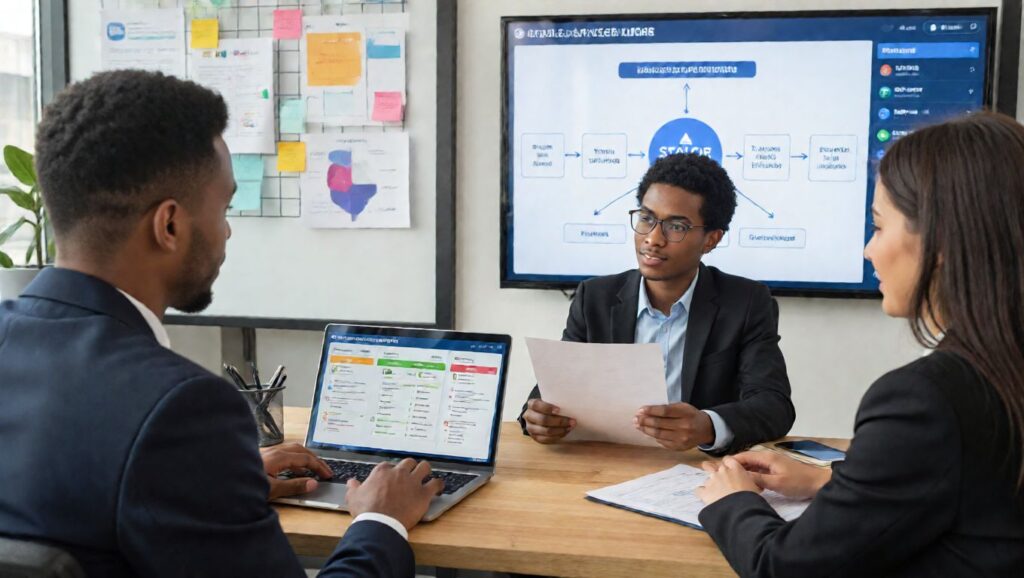
Many hiring managers also want to know what is the STAR interview method and how does it work. STAR stands for Situation, Task, Action, and Result. This framework encourages candidates to provide complete, detailed answers that reveal how they approached real situations and what outcomes they achieved.
Businesses often ask how behavioral interviews predict future job performance. Candidates who consistently demonstrate initiative, problem-solving, customer focus, and accountability in previous roles are more likely to exhibit those same qualities in future positions.
It’s also valuable to understand how structured interviews improve customer service and sales. Hiring employees with proven interpersonal skills, adaptability, and customer-first thinking leads to stronger customer experiences, improved retention, and increased sales opportunities.
In 2026, structured behavioral interviews are one of the most effective hiring tools available to small businesses. By using a consistent interview process and focusing on real-life experiences rather than hypothetical answers, businesses can make better hiring decisions, reduce costly turnover, strengthen company culture, and build high-performing teams that contribute directly to long-term sales growth.